
Andres Lecarors from the chilegroup Los
Problemas have anserwed a lot of questions from
me in ithe beginning of october 2026. I think
it´s the first time I have heard and interviewed
a punkgroup from Chile.
Please tell me the story of Los Problemas. Why
did you start playing this kind of music?
-Hi!
First of all, thanks so much for being
interested in our band from so far away. I'm
Andrés, the band's bassist, vocalist and founder,
and I'm the one answering this interview. I'll
try to speak on behalf of everyone, but it's
important to introduce myself because some of my
answers may reflect my own opinions rather than
those of the other members. Some topics are
personal and don't necessarily reflect the views
I share with my friends and brothers in Los
Problemas.
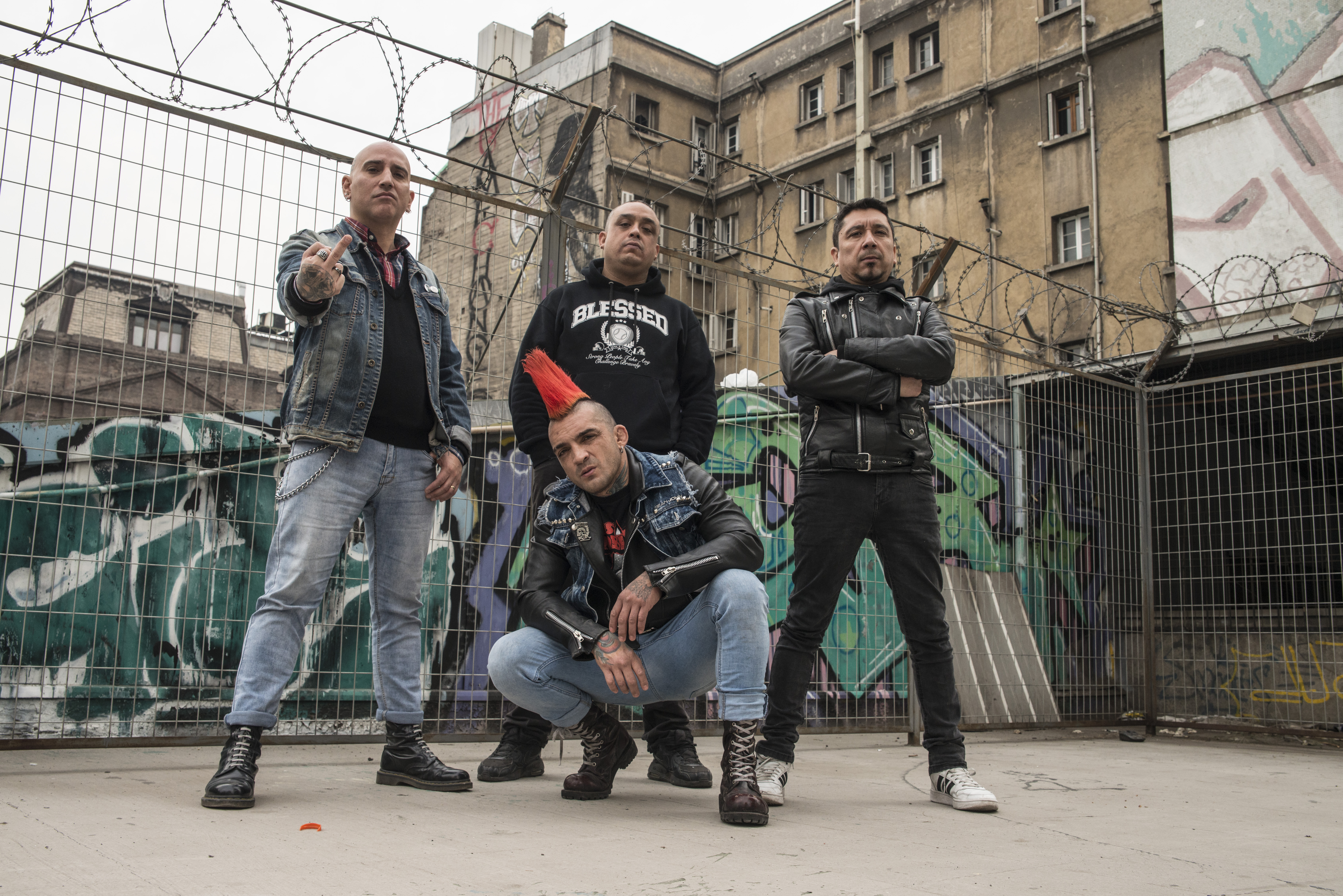
Los Problemas are a South American band,
specifically from Chile, formed by veteran
musicians from the scene. We started playing
just before the COVID-19 pandemic. Personally,
the project came about because I wanted to
return to my musical roots, after spending a
long time playing other styles of music. So I
called up my friend Rodrigo “Periko” (guitarist),
and many musicians came and went before we
arrived at the current lineup.
The reason we play this kind of music is that
it's the music of our lives. We're not young
anymore, but we still have a lot to say and
plenty of stories to tell about what we've
experienced.
Please tell me a little about each member: age,
instruments, previous bands, side projects (if
any), and a secret about each of them.
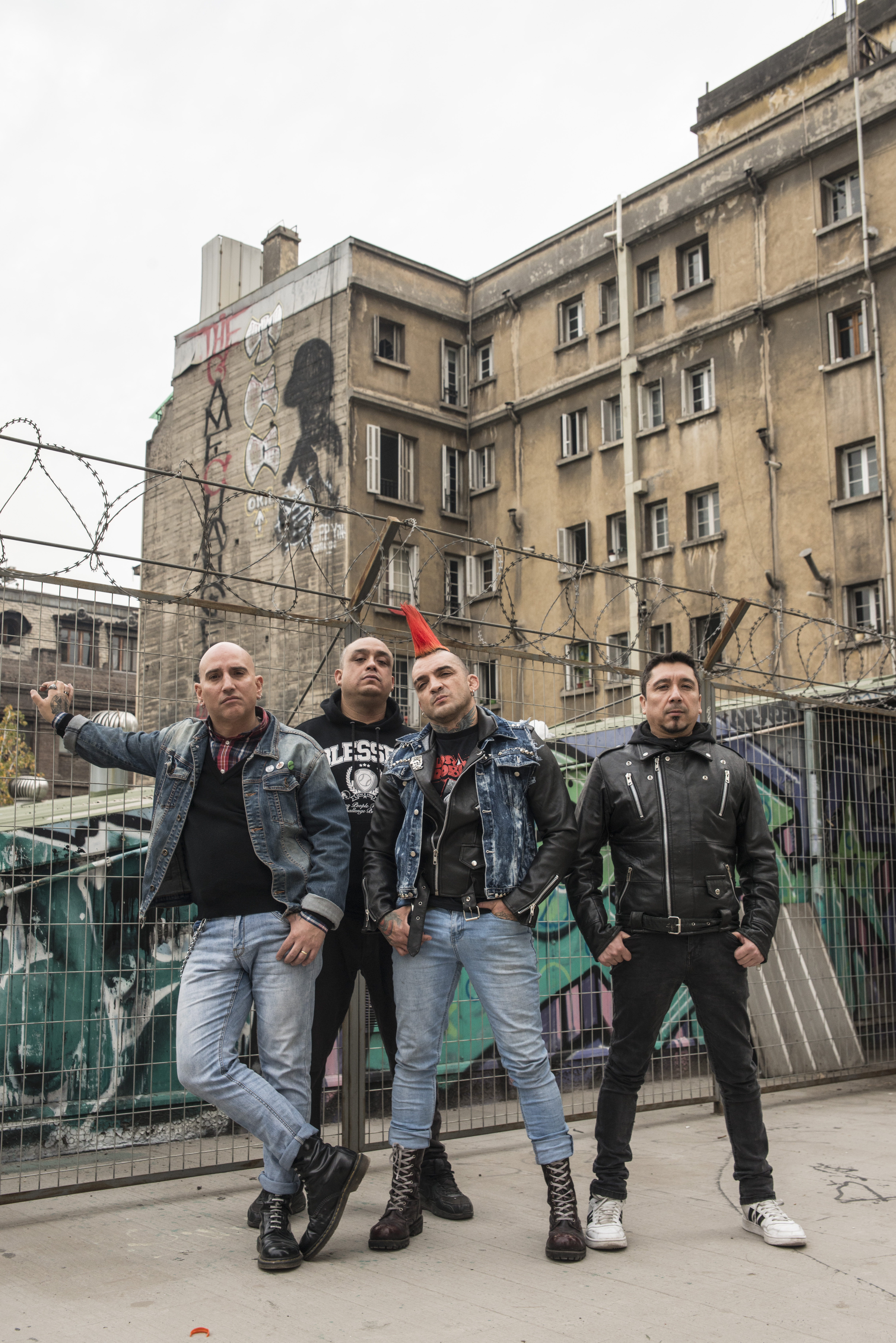
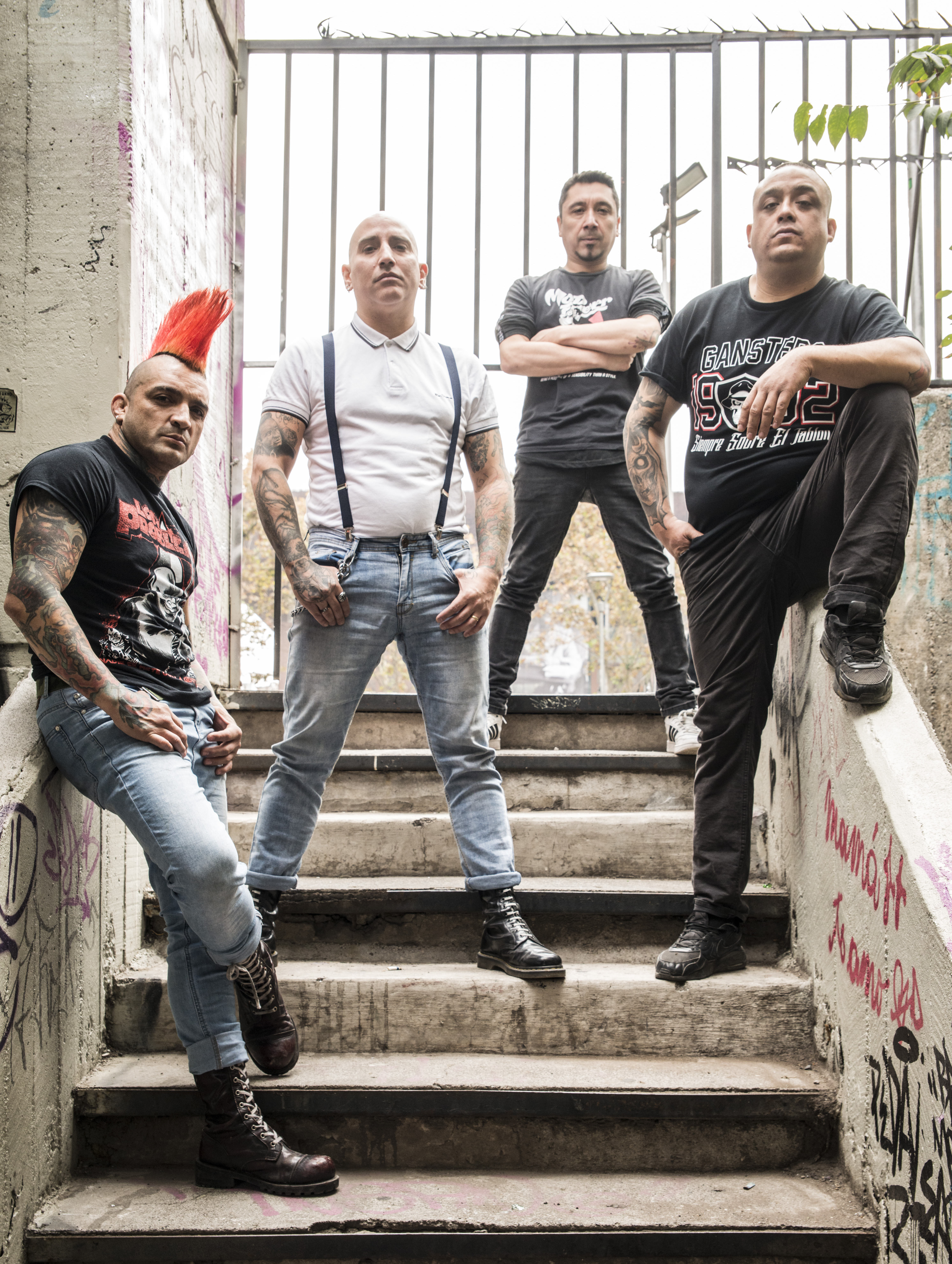
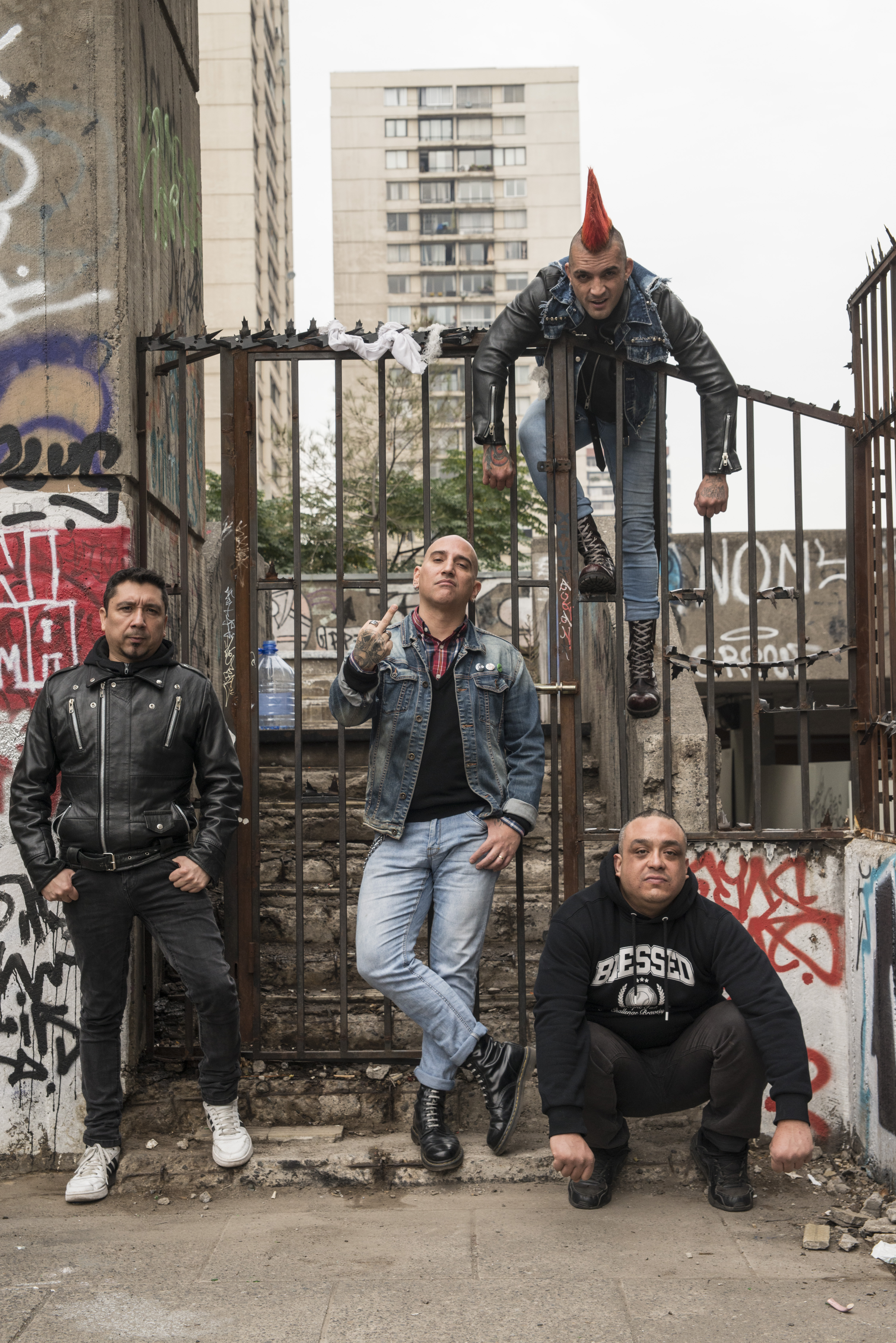
-The
band consists of Andrés (bass and vocals),
Rodrigo (rhythm guitar and backing vocals),
Mauricio (lead guitar) and Felipe (drums). We're
between 37 and 45 years old.
Rodrigo's previous band was KAS, which is
currently inactive. Felipe also played with them
for a while. Felipe has also played in Oi! and
hardcore bands such as Sudor Obrero. Mau has
been involved in other projects too, such as
Monte Calavera.
None of them currently have any side projects.
I've played in several bands over the years, the
most representative of the genre being Criminal
Skin. I've also been involved in projects with
other styles, such as Andrés Lecaros & Los
Forajidos (country, blues and rock) and Bar
Infierno (hard rock/punk). Besides Los
Problemas, I currently play in a band called
Neblina (pop-rock and ska).
We
don't have many secrets, but I can tell you
something personal about each member. Rodrigo is
a professional MMA fighter, although these days
he's more focused on Brazilian jiu-jitsu. Felipe
grew up in a children's home and now works as a
caregiver at a home for children, just like the
one he grew up in. Mau works in audiovisual
production and helps us with our videos, but
he's also our “guardian angel.” Whenever fights
break out and we have to get involved, he's the
one responsible for keeping our musical
instruments safe, which is essential!
As
for me, I'm just a drunk who writes songs, but
I'm also a father who loves his daughters.
Looking at Discogs, it seems like you release a
record every year. Is that right?
-Since
we're a young band made up of older guys, we've
tried to record as much as possible, and we
intend to keep doing so. We always struggle with
time and money, though. Even so, our songwriting
factory is still running, and we hope to release
more albums, singles, collaborations and
whatever else we can during the time we have
left.
Do
you really feel you've released a record if it's
only available digitally?
-Of course! Digital is the format people listen
to the most in this part of the world.
We're lucky to have a label, Smith & Miller,
that has released our records on vinyl.
Otherwise, we wouldn't have the money to produce
physical editions. Here in South America,
musicians can't make a living from this, and we
all have shitty jobs that barely pay the bills.
You sing in Spanish, but you also sing in
English on your latest 7-inch single, Made in
Chile Vol. I. Is it difficult to sing in
English?
-Not
for me, although I've never formally studied
English. I've always had friends from different
parts of the world and an interest in talking to
them. Ever since I was a kid, I've also wanted
to understand the lyrics of the bands I like.
When you sing in another language, you have to
practise the pronunciation, but once you've
memorised the lyrics, it sticks.
What are your lyrics about? Do you sometimes
include politics, or do you think politics has
nothing to do with music? Which is your most
political song?
-Our
lyrics are about real stories rather than
speeches or visions of how the world should
be. We sing about everyday working-class life,
life in the poorer neighbourhoods and
subcultures.
Our songs deal with street life, with all its
friction, fights and contradictions. We also
sing about loyalty and unbreakable friendship.
And, of course, we celebrate drinking culture,
nights in bars and nights out on the streets as
part of our lifestyle. Through all these stories,
we show our world, which is full of injustice
and misery.
From a political perspective, our lyrics don't
come from any particular political tendency. We
don't tell anyone what they should do. And we
don't care about good and evil as defined by the
self-righteous rhetoric of people who think
they're better than others because they think
one way or another.
We
hate cancel culture and the censorship imposed
in many punk subgenres.
Some of our lyrics have a social subtext, if you
want to call it that. We speak from a place of
frustration with the judicial and socioeconomic
systems, hatred of the police, politicians and
authorities, and a general sense of
disappointment at the lack of a promising future.
As
for our most “political” songs, people have
sometimes asked us about “El Bate de Béisbol” (“The
Baseball Bat”). It's the story of a man who has
lost everything, including his job and family,
because of slanderous accusations made by his
ex-wife. The song might offend certain
sensibilities within some fashionable movements,
but to us, it's simply a real story. And we're
men, so we sing from our own male perspective.
There's also “A los políticos no les importa” (“Politicians
Don't Care”). It talks about how our
neighbourhoods keep deteriorating for various
reasons, how horrible things happen while
politicians insist on worrying about stupid
things, such as what to call people so nobody
gets offended and other gender-related nonsense.
Meanwhile, criminal gangs do whatever they want,
trafficking women and prostituting women, girls
and children.
The song also expresses how we'd like to kill
those fucking politicians who live in wealthy
neighbourhoods, in safe places surrounded by
rich people. Nothing that happens to us affects
them, yet they think they have the right to
speak on our behalf, decide what's best for us
and, especially, tell us how we should behave.
Fucking bastards!
Who is your favourite political band? In other
words, which band is the best at getting
political messages across?
-That's
a question I can't answer, at least not on
behalf of the band, because each of us thinks
differently and listens to different music.
Personally, I hardly ever listen to “political”
music. By that I mean bands committed to one
ideology or another. It's simply because I don't
believe them.
I've seen the gap between people's words and
actions so many times in my life that listening
to their hypocritical lyrics disgusts me. I
don't believe things are any different elsewhere
in the world. At the end of the day, humans are
humans, and the vices of ego, self-deception and
lying can affect anyone with a microphone just
as much as anyone else.
Is
Chile a good country for punk nowadays? What's
the scene like? Are there any good bands worth
mentioning?
-There
are excellent bands in Chile, some young and
others that have been playing for their entire
lives. The problem is that the scenes are very
fragmented, whether because of political
differences or personal issues.
For example, in my city, you might find four
excellent concerts happening on the same night.
It's good to have options, but it would be much
better if we had a united scene.
Are there any good old-school bands from Chile?
-Punk has been around in Chile since the 1980s,
so there are plenty of older bands, many of them
excellent at what they do, whether it's punk,
hardcore, Oi!, post-punk and so on.
Personally, some of my favourite older bands are
Los Kiltros and 8 Bolas, both from the
Valparaíso region. 8 Bolas were pioneers of Oi!
music here, so they also have considerable
historical importance.
Are any of those older bands still playing?
-Lately,
there's been a revival of older bands getting
back together, but they almost always rely on
their old songs from the 1980s and 1990s to draw
people in.
When they record new albums, you can hear that
something of the original essence has been lost.
It feels forced. The same thing has happened to
classic bands all over the world: after 20 years,
they release a disappointing new record.
However, some bands in Chile's punk scene have
kept playing and recording all along, such as
Los Miserables and Fiskales Ad-Hok. They deserve
special recognition because South America is
full of envy and betrayal within music scenes.
Keeping a band going for so many years without
ending up depressed or, frankly, in a
psychiatric hospital is exhausting.
Your new album is called Nuevas Batallas
(New Battles). Does it have any special
meaning? What does it mean?
-It's
pretty self-explanatory. We're middle-aged men
who've been doing this since our teens, so the
whole Los Problemas adventure represents a bunch
of new battles, without diminishing the battles
we've fought in the past.
What kind of audience comes to your live shows?
Is it just punks and rockers, or is there a
variety of people? Older and younger people?
-It's
mostly skinheads. There are also punks with
mohawks and studs, as well as “barras”—that's
what we locally call casuals or hooligans—and
ordinary people who like our band.
A
lot of people are between 30 and 45 years old,
with very few young people. It seems that punk/Oi!
has stopped being appealing to younger people
around here.
I'm talking specifically about the PUNK/Oi!
scene, because we're not very involved in other
punk subgenres. They never invite us, so I can't
speak for those scenes.
Is
there anyone you miss seeing at your concerts?
-First
of all, our dead friends.
But we also miss a bigger, more diverse audience.
If people here didn't fight over so much stupid
shit, more people would attend concerts.
There are stupid rules imposed by stupid people,
such as saying that if you go and see one band,
you can't go and see another. That kind of
nonsense. It's both shameful and disgraceful.
Imagine the punk movement full of rules. It's
postmodern bullshit, the product of ideologies
that claim to defend certain values but end up
imposing an authoritarianism that seems even
harsher than that of fascists.
You're now working with a German label. How has
that experience been?
-Excellent.
Smith & Miller have treated us very well.
They've been fair, honest and honourable, and
they've released our albums on vinyl, something
that would have been unthinkable for us given
our local economic circumstances. We're nothing
but grateful to them.
Our future with the label is uncertain because
we've had some disagreements over certain bands
we've shared the stage with. Nevertheless, we
hope they'll change their minds and that we can
continue working together.
Please tell me a little about the lyrics of the
following songs:
“Selfish
Pride”
-It
expresses a firm rejection of extremist
political ideologies and fanatics who see the
world in black and white and force you to choose
one side or the other. The song defends
independence and independent thinking in the
face of propaganda.
“Te Amamos” (“We Love You”)
It's open to personal interpretation. It deals
with feelings of devotion and loyalty towards a
figure or leader, highlighting unconditional
support.
“Esposado al juzgado” (“Handcuffed to Court”)
It's about being arrested by the police and,
after spending a few days at the police station,
being taken to court, where they decide whether
you go free or end up in prison. Fear,
resistance and uncertainty are the feelings that
drive the song.
Who writes the lyrics, and how do you compose
your songs? Does someone show up at rehearsal
with a finished song, or do you create them
together through improvisation?
-I
write the songs. That's my role in the band.
If
I feel that a particular lyric might make one of
the other members uncomfortable, we discuss it
and adapt it so everyone feels comfortable
performing the song.
If
you had to describe your music in three words to
someone who's never heard you, which three words
would come to mind?
-Honesty
– Realism – Anti-dogma.
Please tell me a little about the following
records and what they mean to you…
The record that makes Los Problemas sound the
way they do:
-Cock
Sparrer – their entire discography.
The first record you bought with your own money:
-Poison
– Open Up and Say... Ahh!
The record you wish you'd been involved in
recording:
-Sex Pistols – Never Mind the Bollocks.
A
record you like but supposedly shouldn't like:
-There's
no record I shouldn't like in theory. I enjoy
many different styles of music. Music is for the
people who listen to it.
The record that inspired you to play rock music:
-AC/DC – Live, or Ramones – Mondo
Bizarro.
Have you played much outside Chile? What's your
dream place to play?
-We've
only been outside Chile once, and that was very
recently.
We
went on a European tour with four shows in
Germany alongside our friends Haymaker and
Martens Army, as well as a bunch of great bands.
We also played at the Beach Beer Chaos festival
in Barcelona, Catalonia, and did two shows in
Portugal alongside the legendary Mata Ratos.
It
was an incredible experience, with so many
stories and new friends that there's enough
material for a separate interview. Apart from
that, we don't have much experience playing
outside our own country, not even in South
America… yet.
Our dream place to play is… Sweden, of course!
What else could I possibly have answered?
Hahahaha!
If
you could organise a big concert with both
active and disbanded bands—a mini-festival
featuring five bands plus Los Problemas—which
bands would you choose?
-Sex Pistols / Cock Sparrer / Rose Tattoo / The
Crack / Los Problemas.
Is
there any Swedish band you like?
I
first came across the term Oi! when I was in my
early teens. Someone lent me a cassette by the
punk band Conflict.
The person who lent it to me had used the
remaining space on the tape to record a few
random tracks. This was very common back when
blank cassettes lasted an hour and you could
sometimes fit several albums onto one tape.
Those extra tracks were by Oi! bands from that
era, and one of them was Agent Bulldogg, with
their incredible song “Backstreet Boys.” So
Sweden has been on my radar ever since.
It
goes without saying that Perkele are a great
band. They had an incredible period when they
seemed to write nothing but anthems. I really
like the melodic, nostalgic sound of their best
years.
Even though they've moved away from the Oi!
image, they'll always be a great band. There's
no denying that.
Several years ago, before I started playing with
Los Problemas, I also worked on the Chilean show
of the Swedish death metal band Unleashed. We
got along really well. Great drinkers, hahaha!
Metal isn't really my thing, but we hit it off.
They're excellent, down-to-earth and very kind
people. I remember them very fondly.
Do
you care about criticism? What's the strangest
criticism you've received, either with this band
or another band you've played in?
-Negative
personal criticism from strangers is always
unpleasant, especially for an artist. Artists
are sensitive people, so it can get to you when
you're going through a rough patch or nursing a
hangover.
It's unpleasant when people who don't know you,
know nothing about your story and have never
even shared a beer with you start talking about
you and your life as if they knew a fucking
thing.
There are some very cowardly and insignificant
people who write whatever they want on social
media, and sometimes that can affect your mood.
But even if they can ruin your day, I don't care
what they say, and I will never give that kind
of criticism any consideration whatsoever.
I
have plenty of friends, acquaintances and people
who simply listen to the band who disagree with
me and offer constructive criticism. I always
take their opinions into account. Often, they
make me realise I'm wrong, and that has a
positive effect on my life or my work. That kind
of criticism is worthwhile.
As
for musical criticism, we're not gold coins that
everyone has to like. So when people say our
band is “bad” or that we're “too pop to be
punk,” they're perfectly entitled to their
opinion.
Personally, I try not to comment on bands I
don't like. But if people don't like us and want
to say so, that's their right.
Down with fucking censorship!
Throughout my life, I've received all kinds of
criticism. People have called me a Nazi or a Red
as a way of putting me down, or because they
believed something someone had made up about me.
People have spread all kinds of lies about me.
They've said I'm gay, anti-gay, anti-punk, a
shaved-head punk, a rich kid, and once someone
even made up a story that I'd killed my own baby.
Hahahaha! That was the funniest one.
Stupid people also say I “think I'm a cowboy”
because I play country music. That's pretty
funny too.
The number of idiots you can come across in this
scene is unbelievable. It's a reflection of
society, but with a lot of personality disorders
thrown into the mix.
Which bands are you compared to? Is it
frustrating to have one band compared to another,
or is it understandable?
-It's
perfectly understandable. The bands I like have
a direct influence on our music.
People have called us the Cock Sparrer of South
America, which makes me feel a little proud and
a little embarrassed at the same time, because I
don't think we're that good.
Cock Sparrer are my favourite band of all time.
I have their logo tattooed on my neck, so it's a
great comparison, but perhaps it's a little too
much for us to live up to.
Have you released anything else besides
Nuevas Batallas? How can I get it?
-Before
Nuevas Batallas, we released our first
LP, El Último de su Especie, available
through Smith & Miller.
Before that, we released an EP called Malos
Vecinos, available through the French label
Amor y Rabia. We also have a split release with
the Portuguese band Mata Ratos, available
through the Tomba Lobos label.
Are you planning to release another record soon?
Will there be a tour, or what's next?
-Yes, we want to release another LP in Spanish
and continue with Made in Chile Vol. II,
featuring songs in English. But I don't know how
long it will take.
Our next release will be an appearance on an
international compilation organised by our
brothers in the French band Komptoir Chaos. We
recorded a new song in English called “Tired of
Bein' Poor,” which we really like.
I'm looking forward to sharing the studio
version with the world, because we've already
been playing it live at our shows in Europe.
What's your favourite song of your own? And
which one is the audience's favourite?
-All
our songs contain a little piece of me. Right
now, my favourite is the last song we recorded,
the one I mentioned in the previous answer,
because we haven't played it very much yet, so
I'm not tired of it.
The audience really likes a song called “Cerveza
en primavera” (“Beer in Spring”). It's a message
of encouragement to a friend who's going through
a difficult time. Many people have identified
with the lyrics and let us know how much they
mean to them.
We've lost many friends to suicide in this
country, and it's a very sad subject. I wrote
the song thinking about what you could say to a
friend who sees no way out of their serious
problems.
In
the end, the message is that, no matter what
happens, “There will always be a beer in spring.”
Which record is essential to have on the tour
bus?
-As I said, we haven't done many tours, but I
suppose you'd want something relaxing to sleep
off your hangover before arriving at the next
drinking session.
I
really like bands such as Lynyrd Skynyrd and The
Black Crowes for road trips. Southern rock
evokes that kind of feeling.
Do
you buy a lot of records, or do you stick to
Spotify and similar platforms for listening to
music? Are there any good record shops in your
city?
-The
truth is, I don't listen to much music. Silence
helps me be prolific and constantly think about
new songs.
That's why I don't listen to music through
headphones when I'm walking down the street or
taking public transport to work. It's a good
time to think and rethink my own songs.
As
for buying records, I hardly buy any. I don't
have much money, and I'm very disorganised. I
lend records to people or give them away when
I'm drunk!
But I'm an exception. There are plenty of record
collectors here who take it very seriously.
There are several Oi! and Jamaican music DJs who
own some real gems.
As
for record shops, there are several, although
records aren't particularly cheap here in South
America. There are shops for different budgets.
In
my case, I'd mention Poison Records, because
they sell Los Problemas records. But that's just
a bit of promotion for a good friend and
collaborator.
There are many people working in music who play
an essential role in promoting bands and keeping
the scene alive, such as Voz Propia, Buena
Basura, Maldita Cruz, Bar Records and Oi! Fin
del Mundo, among others.
Is
music a good way to release frustration and
become a better person outside of it?
-To
release frustration, YES. To become a better
person, NO.
People are who they are, regardless of what they
sing about, and there's all kinds of people in
the music scene.
I
think it's very important to separate the work
from the person, because there are many
exceptional artists who are absolute bastards in
their personal lives, and vice versa.
If
we judged people by that standard, there
wouldn't be much left to listen to, read or look
at.
What can a young person do today to shock their
parents, like we did when we were young? Have
they already seen it all?
😉
-I
suppose being Christian, traditionalist and
wanting to start a normal family would do it
nowadays—especially for kids whose parents are
people like us! Hahahaha!
Honestly, I don't know what could shock parents
these days. Perhaps gender transitions during
adolescence or childhood are controversial
topics.
Back in our day, it was wearing an upside-down
cross or sporting a mohawk.
But from what I've experienced, everything is
cyclical. Societies move from conservative to
liberal and back again in an endless loop. When
one trend destroys itself, the opposite trend
emerges with force.
Do
interviews bore you? Do you do many of them?
Which do you prefer: phone interviews,
face-to-face interviews or email interviews like
this one?
-I
love interviews! The media and the scene don't
give us much coverage, so I'm very grateful for
them.
What really pisses me off is when people don't
read interviews and continue believing rumours
and stupid shit. In the end, there's no better
source than the source itself.
As
for the format, I prefer written interviews.
That way, I can review my answers and make sure
I express exactly what I want to say.
Sometimes you're interviewed while drunk after a
concert and end up talking so much shit that the
next day even you are shocked by your own
answers.
What are the band's future plans? And what about
your personal plans?
-We
want to keep creating, recording and touring,
discovering different cities, countries and
people, and sharing our music and our country
with as many people as possible.
How are we going to do it? No idea! But we'll
figure it out. All we need are plane tickets.
We'd like to return to Europe. It seems easier
for us to tour there than in South America,
because in Europe you're paid for every concert.
Here, we often play for nothing.
You can also sell merchandise at European shows
and recover some of your expenses. Here, people
buy very little or nothing at all. They haggle
over ticket prices at the door and try to sneak
their own alcohol into venues.
There's no money and there's no support,
although the scene has a different kind of magic.
You can feel the chaos: punk, disorder and the
nihilism of the working class.
Personally, I just want to keep surviving. I'm
going through a very sad period in my life, so
anything good, no matter how small, brings me
some happiness… like this interview.
Any words of wisdom?
-Make
war, not love! Hahahaha!
Honestly, I'm nobody to give advice. But what I
wish someone had told me when I was young is
this: follow your dreams, do whatever you want
without waiting for anyone's approval, and don't
let internet dickheads intimidate you.
And change your mind whenever you realise you're
going down the wrong path or that you're simply
wrong about something.
Nobody else is going to pay your bills at the
end of the month, so you don't owe anyone
anything, especially not a bunch of stupid moral
dictators.
Anything else you'd like to add?
Thanks so much, Peter and Skrutt Magazine! I've
really enjoyed answering this interview. I hope
someone actually reads the whole thing!
And if you're a reader who made it all the way
to the end… we love you, you motherfucker!
Andrés Lecaros
Los Problemas